By 2018, Avery and I had built some momentum. We'd survived messy rehabs, expensive financing, long-distance management, and lost $20,000 on one deal.
What we hadn't done yet was buy a duplex. So in 2018, we bought our first one.
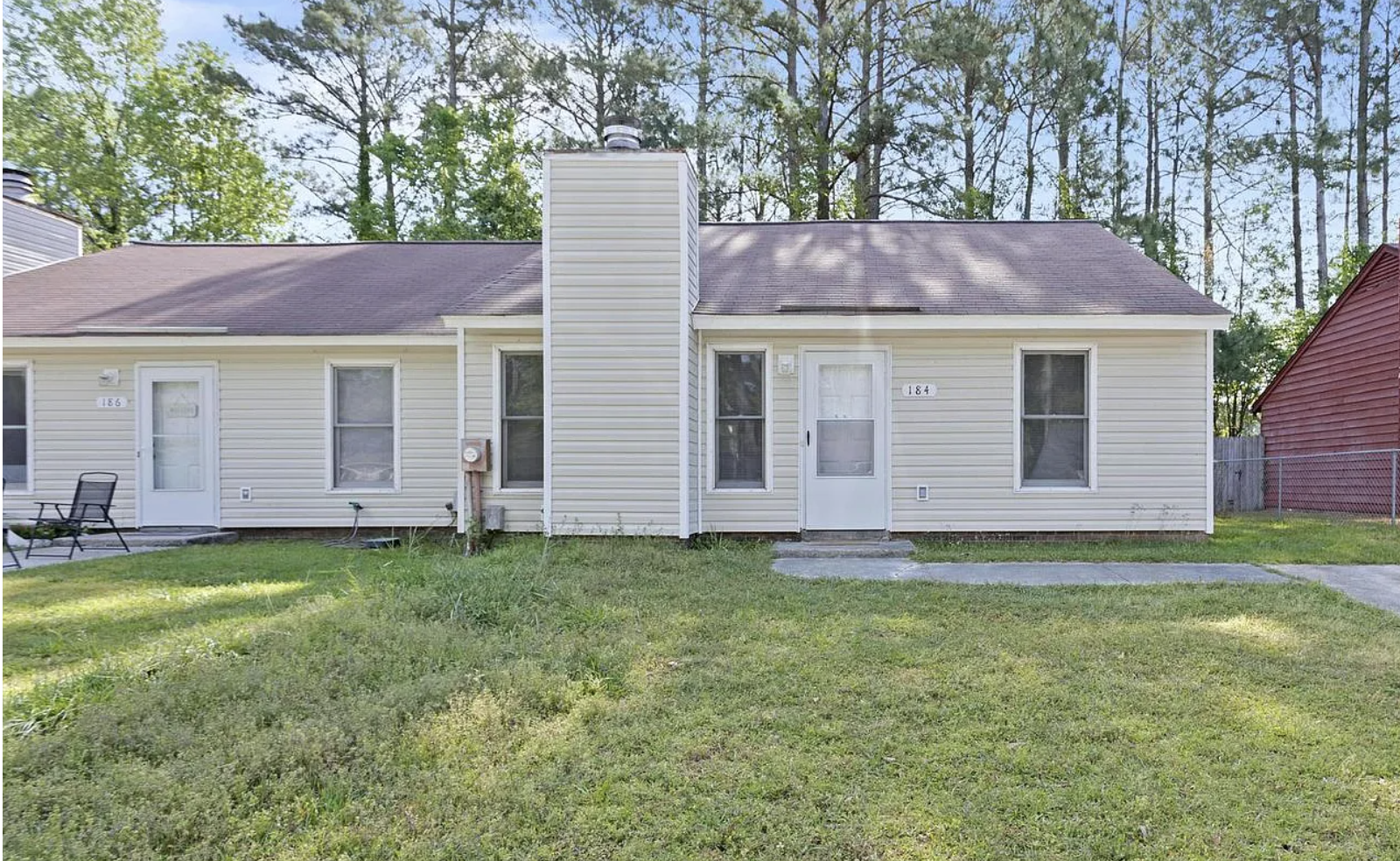
The property was a small two-unit building just minutes from Camp Lejeune in Jacksonville, North Carolina. It was our first off-market deal, our first duplex, our first cash-for-keys negotiation, and the first property Avery managed herself.
It also came with a surprise that nearly killed the deal after we were already under contract.
Today, this duplex has produced an infinite return, funded future acquisitions, and quietly became the testing ground for the management systems we still use today.
This post is part of my First 10 Real Estate Deals series, where I break down the good, the bad, and the ugly of my first ten real estate investments.
👉 First 10 Real Estate Deals -- Series Hub
Deal Snapshot
Item | Details |
|---|---|
Year / Market | 2018 -- Jacksonville, NC |
Property Type | Duplex |
Purchase Price | $72,000 |
Initial Appraisal | $82,000 |
Initial Equity | ~$10,000 |
Initial Rehab | ~$14,958 |
Additional Renovation (2022) | ~$15,000 |
All-In Cost | ~$101,964 |
Financing (Initial) | $54,000 @ 5.5% |
Financing (2024 Refi) | $157,500 @ 7.38% |
Current Value (2026) | ~$295,000 |
Loan Balance | ~$157,500 |
Equity Today | ~$137,500 |
ROI | Infinite (after 2024 refi) |
The Story
How I Found the Deal
This deal came through an Eastern North Carolina wholesaler connection I found by calling every wholesaler I could find on Facebook Marketplace and Craigslist.
On paper, it looked straightforward. But once we were under contract, I uncovered something no one else had caught: one set of tenants hadn't paid rent in six months. The wholesaler didn't know. The property manager didn't know. Even the owners didn't know.
I had the courage to continue underwriting the deal to see if I could make it work.
Due Diligence (What I Checked and What I Missed)
Finding the non-paying tenants forced a hard decision. We could walk away, or solve the problem before it became ours.
We chose cash for keys.
We told the tenants: if you're out by the day before closing, we'll hand you cash that day. If not, we walk. They moved out. We closed.
It was the first time we'd ever used cash for keys, and it worked really well.
Financing, Renovations, and Reality
We financed the purchase with a traditional mortgage and planned modest renovations: paint the siding and interior, refinish the cabinets, and install new flooring.
That plan didn't survive first contact with reality. We didn't lock the contractor into a signed bid, and costs ran over. That mistake led us to permanently add a 10-20% buffer to every rehab budget (10% buffer for light rehabs and a 20% buffer for rehabs with heavy demo and the potential for a lot of unforeseen obstacles).
Still, replacing problem tenants with good ones immediately improved cash flow. This was also the first property Avery managed herself, and we used this experience to build our systems for budgeting, coordinating contractors, finding tenants, collecting rent, inspecting properties, and performing preventative maintenance.
Those systems eventually became the foundation of Cedar Ridge Management.
Wins and Losses: My Lessons Learned
Lesson 1: Cash for Keys Can Work Well
Evictions take time, money, and emotional energy. In this case, paying tenants to leave was faster, cheaper, and cleaner. We turned this into a win-win-win for the tenants, the sellers, and us. We offered to return the tenant's full security deposit of $400 if they completely moved out the day before closing. I did not want to let $400 come between me and a great deal.
Lesson 2: Contractors Need Signed Bids, Not Estimates
Going over budget on siding taught us a permanent rule: no signed bid, no work. We now get signed proposals for all work. Initially, some contractors didn't like this, but we never again would let a contractor say costs ran higher than expected without a documented reason.
We also now budget 10-20% above our rehab budget. If we don't use it, great. But we never rely on perfect execution.
Lesson 3: Think About Renovations in Terms of ROI
In 2022, we intentionally spent $15,000 on a turnover renovation and increased rent by $300/month. That's a 24% return on the renovation alone, without changing the property's footprint.
We didn't need to spend $15,000; we could have cleaned it and rented it out. But spending $15,000 to increase rents by $300 a month was a great return on the opportunity cost of that capital sitting in the bank.
Lesson 4: Cash-Out Refinancing Can Unlock Infinite Returns
In 2024, we refinanced and pulled out $100,000 while keeping the property cash-flow positive and staying under a 60% loan-to-value. That refinance funded future purchases and turned this deal into an infinite return.
This is exactly the kind of scenario I model today using my Real Estate Investing Analyzer [insert link here – PMW, you need to put the link here after you add the video to my education tab].
Financials (Reality Check)
Initial cash flow: ~$2,125 annually
Current net cash flow: ~$2,876 annually (after pulling all initial investment out)
Lifetime cash received: ~$123,440
Cash left in the deal: $0
The longer we held, the better this deal got.
How This Deal Changed My Future Deals
We actively pursue off-market deals
We are comfortable using cash for keys
We standardize contractor controls with signed bids
Most importantly, this was the property where Avery built the systems that became our company.
Key Takeaways
Cash for keys can save time and money
Tenant quality drives profits and workload
Always lock contractors into signed bids
Renovations can produce outsized returns when you underwrite the ROI
Cash-out refinancing can create infinite ROI
Time in the market beats timing the market
What is Next
In Deal #5, I break down how I found a deal through direct outreach after Hurricane Florence, wholesaled it to a friend, and accidentally launched Cedar Ridge Management.
👉 Deal #5: The $33,380 Duplex That Built My Deal-Finding System
Looking back at the previous deal in this series: Deal #3: How Two Cash-Flowing Properties Lost Me $20,000
If you want to evaluate deals with a long-term lens, not just monthly cash flow, download my Real Estate Investing Analyzer + Deal Analysis Video.
Want Help Evaluating Your Next Deal?
At Cedar Ridge Management, our mission is to enable financial freedom for owners, tenants, and teammates.
If you are interested in real estate investing, or have a home you want to rent out and want to partner with a local, investor-minded property manager, schedule a call with our team here.
We would love to partner with you.