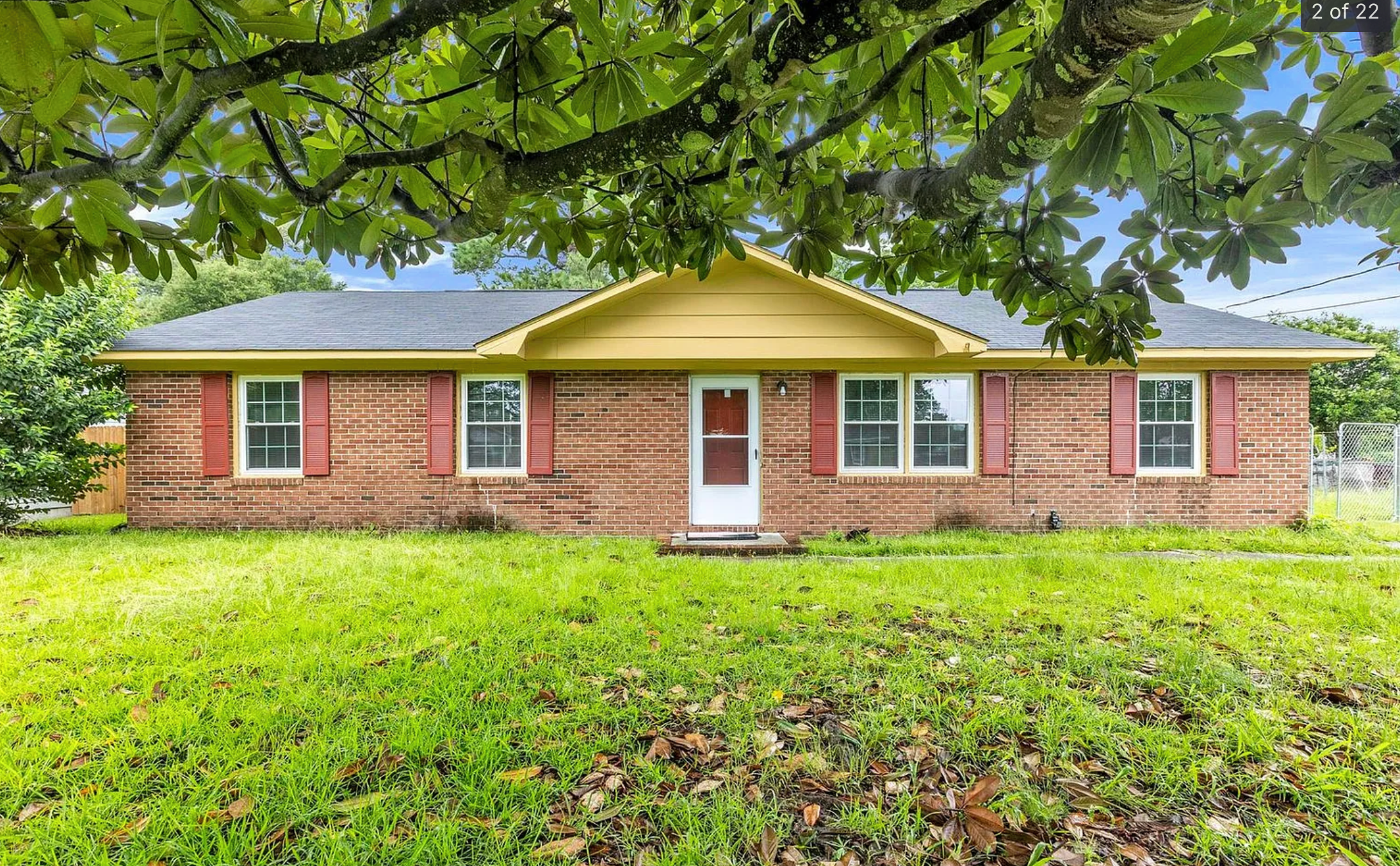

My insurance agent sent me a message about a wholesale opportunity in Castle Hayne.
A 3-bed, 1.5-bath house with a tenant in place and no lease. Rent significantly below market. A seller who needed to move on.
On the surface, it looked like a straightforward value-add play. But the floor plan told a different story. The layout made it easy to convert to a 4-bedroom, 2-bath, which would push rent well above what a 3-bed, 1.5-bath could support in that market. That conversion was the deal.
Before I made an offer, I did something I had learned to do the hard way in Deal #7: I called the county.
I confirmed the conversion could be permitted. I confirmed the flood zone status. I confirmed there were no elevation requirements or code complications that would affect the budget.
That one phone call, a lesson that cost me significant time and money two deals earlier, took about 20 minutes and protected the entire project.
This is what experience compounding looks like. Not avoiding hard decisions. Not finding easier deals. Executing the same strategy with fewer self-inflicted mistakes.
This post is part of my First 10 Real Estate Deals series, where I break down what actually happened, not polished success stories.
👉 First 10 Real Estate Deals -- Series Hub
Deal Snapshot
Item | Details |
|---|---|
Property | 105 Brier Road, Castle Hayne NC |
Year / Market | 2025 -- New Hanover County, NC |
Property Type | Converted from 3 bed / 1.5 bath to 4 bed / 2 bath |
Purchase Date | February 3, 2025 |
Purchase Price | $212,000 |
Closing Costs | $8,480 |
Rehab Cost | $40,624 |
Total Cash Invested | $93,624 |
Loan Amount | $159,000 at 7.125% |
Monthly P&I | $1,071.21 |
Current Rent | $1,950/month |
Fair Market Value (ARV) | $291,000 |
Immediate Equity at Purchase | $29,896 |
Strategy | Value-add conversion, long-term rental |
The Story
How I Found the Deal
This deal came through a relationship with my insurance agent. Deal flow does not come exclusively from wholesalers, MLS listings, or direct mail campaigns. It comes from every person in your professional network who knows what you are looking for. When this opportunity came across his desk, he thought of me.
The property had a tenant in place with no lease and rent significantly below market. The seller needed to move on. Both facts created opportunity, but only for a buyer who understood how to navigate them.
Due Diligence
The conversion was the thesis. Before anything else, I needed to know it was executable.
I called the county. I confirmed the 4-bedroom, 2-bath conversion could be permitted. I confirmed the flood zone classification. I confirmed there were no elevation requirements or code complications. All of that took less than a half hour and protected a six-figure investment.
I also confirmed the tenant's willingness to vacate before closing, not after.
Financing, Renovation, and Reality
$159,000 loan at 7.125%, 30-year fixed. Monthly P&I of $1,071.21. Total cash out of pocket including rehab: $93,624.
The permitting went smoothly. The conversion went smoothly. The execution did not.
I decided to try a new contractor on this project. I test new vendors on my own properties first so that problems affect me before they affect my clients. In this case, it was the right instinct but the wrong contractor. A 6-week renovation turned into 3 months. I held back 10% of the final payment when the contractor failed to complete the job, then brought in a trusted handyman to finish the work.
Leasing Reality
The original leasing plan was Section 8 at an expected rent of $2,485 per month. Demand from the housing authority in this area was limited. We pivoted to a different subsidized housing program serving elderly tenants with disabilities. Final rent: $1,950 per month.
That was $50 below my underwritten rent of $2,000. Because I underwrote conservatively rather than to the Section 8 ceiling of $2,485, the pivot was a minor adjustment, not a crisis.
Financials (Reality Check)
Acquisition and Renovation
Purchase Price: $212,000
Closing Costs: $8,480
Rehab Cost: $40,624
Total Cash Invested: $93,624
Loan Amount: $159,000 at 7.125%
Monthly P&I: $1,071.21
Immediate Equity at Purchase: $29,896
Current Performance
Monthly Rent: $1,950
Vacancy Rate: 5% (planned vacancy rate, not my actual vacancy)
Monthly Expenses: $627.37
Monthly NOI: $1,225.13
Monthly Debt Service: $1,071.21
Monthly Cash Flow (BTCF): $153.92
Annual Cash Flow: $1,428.55
Equity and Total Return (Year 1)
Immediate Equity at Purchase: $29,896
Loan Paydown: $1,577
Cash Flow: $1,429
Total Return: $32,902
Investor Metrics
Cash-on-Cash Return: 1.5%
Total ROI: 35.1%
Effective Annual ROI: 29.3% (35.1% / 1.20 years)
DSCR: 1.11
Expense Ratio: 35.75%
The 35.1% total ROI in Year 1 is driven primarily by the $29,896 in immediate equity captured at purchase. Monthly cash flow of $153.92 reflects a high interest rate environment, a higher expense model, and rent that came in $50 below the underwritten target. This deal was designed to create equity and hold for long-term appreciation, not to be a cash flow machine in year one.
Wins and Losses: My Lessons Learned
Lesson 1: Apply Past Mistakes Immediately and Specifically
Deal #7 cost me real money because I did not confirm permitting before closing. Deal #10 protected me because I did. That is what learning from mistakes actually looks like. Not a vague resolve to be more careful. A specific action taken at a specific point in the process.
Lesson 2: Contractor Selection Matters More Than Price
I chose a new contractor on this deal with a legitimate reason: I test vendors on my own properties before trusting them with client properties. The instinct was right. The execution revealed the contractor was not ready for a project of this scope. I should have started him on a smaller project first.
Lesson 3: Always Have a Backup Leasing Strategy
I underwrote at $2,000 per month with Section 8 as the primary strategy. When housing authority demand was limited, I pivoted to $1,950 through a different program. Because I underwrote conservatively, the pivot was minor. Conservative underwriting is not pessimism. It is the margin that lets you adapt.
Lesson 4: Not Every Deal Needs to Be Perfect to Work
Rent came in $50 below target. The renovation took three months instead of six weeks. The Section 8 placement did not materialize. The deal still produced a 35.1% total ROI in Year 1 and $29,896 in immediate equity. Perfect execution is not required. The plan needs to be sound, the underwriting conservative, and the investor adaptable.
Lesson 5: Execution Is Where Deals Are Won or Lost
The underwriting was solid. The permitting was confirmed. The numbers worked. The biggest challenges came from execution. As your deals get more complex, underwriting becomes the floor, not the ceiling. The investors who separate themselves execute well under pressure.
What Went Right
Confirmed permitting before closing -- directly applying the lesson from Deal #7
Underwrote conservatively, creating margin to absorb the rent gap and leasing pivot
Captured $29,896 in immediate equity at purchase
Adapted quickly when the Section 8 strategy did not materialize
Held back contractor payment and brought in a trusted resource to finish
Placed a stable tenant through an alternative subsidized program
How This Deal Changed My Future Deals
Permitting confirmation is now a non-negotiable pre-closing step on every value-add deal
New contractors start on smaller projects before being trusted with complex renovations
Leasing strategy underwriting now includes at least one backup approach before closing
Would I Do This Deal Again?
Yes. With one change: I would use a proven contractor with a track record on comparable projects. The deal worked despite the execution friction. With better contractor selection, it would have worked with less stress and a faster timeline.
Closing the Series
Ten deals. Fifteen years. One plan that evolved with every mistake and every win.
The best deals came from relationships, not listings
The worst outcomes came from assumptions that should have been confirmed
Conservative underwriting created the margin to survive when plans changed
Execution determined results more than underwriting did
Time in the market rewarded discipline in ways that were impossible to predict at the start
If you want to see the full plan that guides all of these decisions, start at the beginning: How I'm Building Wealth Through Real Estate [PMW insert link here once you’ve added the first blog in this series about my investing plan].
Key Takeaways
Apply past lessons as specific actions, not vague intentions
Contractor selection matters more than contractor price
Conservative underwriting creates the margin to adapt when the plan changes
Imperfect execution does not break a well-underwritten deal
Permitting confirmation is a non-negotiable pre-closing step on value-add deals
Experience compounds, and it shows up in the mistakes you stop making
What is Next
This is the final post in the First 10 Real Estate Deals series. The next series will cover the next phase: scaling from 10 to 20 properties, paying down mortgages strategically, and using existing equity to acquire without starting from zero.
Looking back at the previous deal in this series: Deal #9: The Base Hit That Created Value on Day One
Return to the full series hub: First 10 Real Estate Deals -- Series Hub If you want to evaluate deals the way I do today, download my Real Estate Investing Analyzer + Deal Analysis Video.
Want Help Evaluating Your Next Deal?
At Cedar Ridge Management, our mission is to enable financial freedom for owners, tenants, and teammates.
If you are interested in real estate investing, or have a home you want to rent out and want to partner with a local, investor-minded property manager, schedule a call with our team here.
We would love to partner with you.